


News
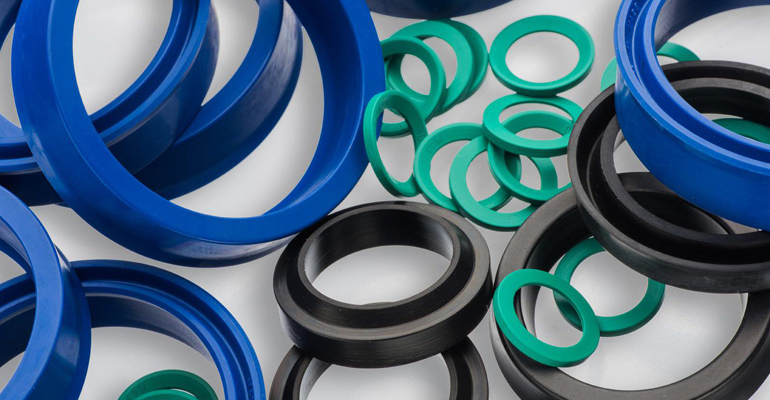
Types of Rubber
1. Natural Rubber (NR) Natural rubber (Isoprene) is derived from the latex sap of the Pará rubber tree (hevea brasiliensis). Natural rubber has a high tensile strength and resists fatigue from abrasion such as chipping, cutting or tearing. The downside is that natural rubber is only moderately resistant to heat, light and ozone damage. Natural rubber is used in gaskets, seals, shock absorbers, hoses and pipes.
2. Styrene-butadiene rubber (SBR) Styrene-butadiene rubber is a low-cost synthetic rubber that offers good abrasion resistance, outstanding impact strength, good flexibility and high tensile strength. However, SBR offers poor resistance to sunlight, ozone, steam and oils. The main applications of styrene butadiene rubber include tires and rubber products, automotive parts and mechanical rubber products.
3. Butyl (IIR) Butyl rubber is an excellent option for shock absorption. It offers extremely low gas and moisture permeability and exceptional resistance to heat, aging, weathering, ozone, chemical attack, flexing, abrasion and tearing. Butyl is resistant to phosphate ester based hydraulic fluids and has excellent electrical insulating properties. It has a tendency to hold air, swell and creep during manufacture. Common applications include O-rings, tank liners and sealants. Its gas tightness makes butyl ideal for gaskets in vacuum applications.
4. Nitrile (NBR) Nitrile (also known as NBR rubber and Buna-N) is the gasket industry's most widely used and economical elastomer. This is partly because of its excellent resistance to petroleum-based oils, fuels, water, alcohols, silicone greases and hydraulic fluids. Nitrile has a temperature range between -54 and +149 degrees Celsius and has a good balance of desirable properties such as low compression setting, high abrasion resistance and high tensile strength. Not recommended for use with automotive brake fluid, ketones, phosphate ester hydraulic fluids, and nitro or halogenated hydrocarbons.
5. Neoprene® (CR) Classified as a general purpose elastomer, Neoprene® is unusual in that it has moderate resistance to petroleum oils and weathering (ozone, UV, oxygen). It is therefore uniquely suited for certain sealing applications where many other materials will fail. It has relatively low compression set, good flexibility and wear, and is resistant to flexible cracking. Neoprene® shares the same operating temperature range as nitrile and is commonly used to seal refrigerants in air conditioning and refrigeration units.
6. Ethylene Propylene Diene Monomer (EPDM) EPDM rubber is a versatile rubber that offers excellent heat, ozone, weathering and aging resistance as well as low electrical conductivity, low compression set and low temperature properties. EPDM can be used as a cost-effective alternative to silicone and, when installed in the right environment, can last a long time before embrittlement. EPDM rubber in various HVAC and automotive applications, as well as O-rings and electrical insulation products.
7. Silicone (Q) Silicone performs well with water, steam or petroleum fluids. Although it can operate in the range of -84 to +232 degrees Celsius, silicone has been shown to withstand brief exposures down to -115 degrees Celsius. Silicone's poor tear resistance, abrasion and tensile strength makes it more suitable for static rather than dynamic applications. The chemical stability of silicone means it is widely used in the food and beverage and medical industries, as well as in sealants, lubricants and circuit boards.
8. Viton® (FKM) Viton® is a fluoroelastomer material capable of handling a wide variety of applications. A DuPont brand, this durable synthetic rubber and fluoropolymer elastomer offers exceptional temperature stability ranging from -20 degrees Celsius to +205 degrees Celsius. The disadvantages of Viton® are that it can swell in fluorinated solvents, is relatively costly, and can degrade quickly if the wrong grade is used. Along with nitrile, it is one of the most common elastomers used in sealing applications, including O-rings, gaskets and gaskets.
9. Polyurethane (AU) Polyurethane is known for its remarkable wear and extrusion resistance as well as its versatile overall toughness. O-rings made of polyurethane will not be suitable for applications that require good compression and heat resistance. The latter is due to a narrower operating temperature range between -54 and +100 degrees Celsius. Polyurethane O-rings are commonly used for hydraulic fittings, cylinders, valves and pneumatic tools.
10. Hydrogenated Nitrile (HNBR) Hydrogenated nitrile rubber compounds exhibit better oil and chemical resistance than nitrile rubbers and can withstand much higher temperatures. HNBR promises excellent resistance to oils, fuels, many chemicals, steam and ozone. It also offers exceptional tensile and tear strength, elongation and abrasion resistance. However, HNBR is relatively expensive and offers limited flame resistance, poor electrical insulation, and is incompatible with aromatic oils and polar organic solvents. HNBR is widely used in the automotive industry and for a wide variety of components including static seals, hoses and belts.


